Day 1 Halifax to Annapolis Royal or Smith’s Cove | 322 km/200 mi
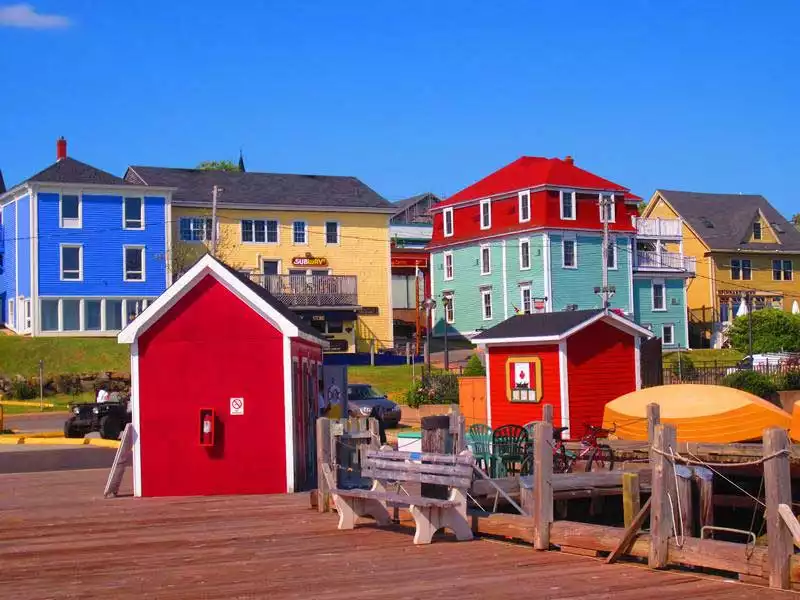
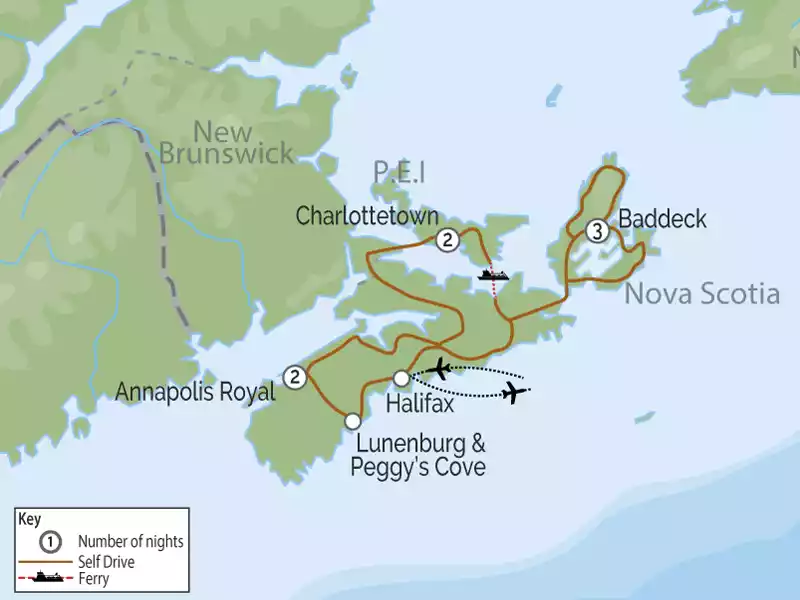
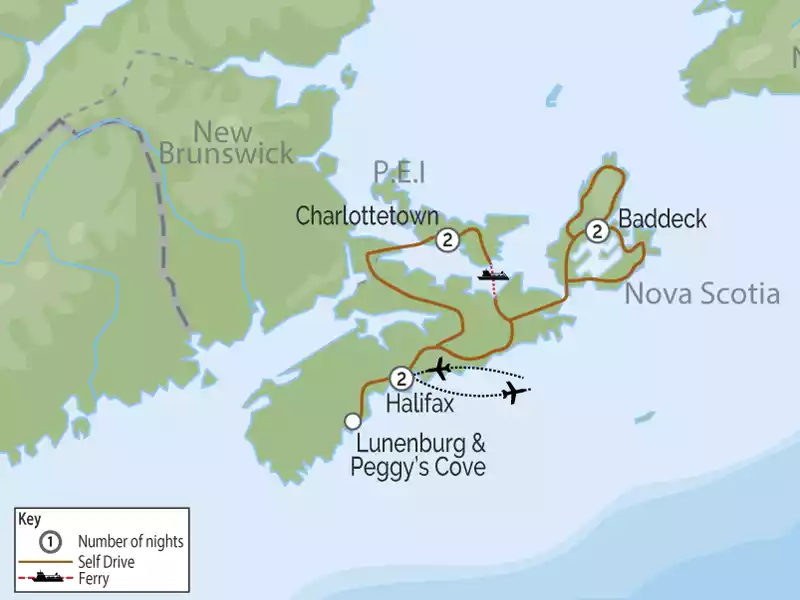
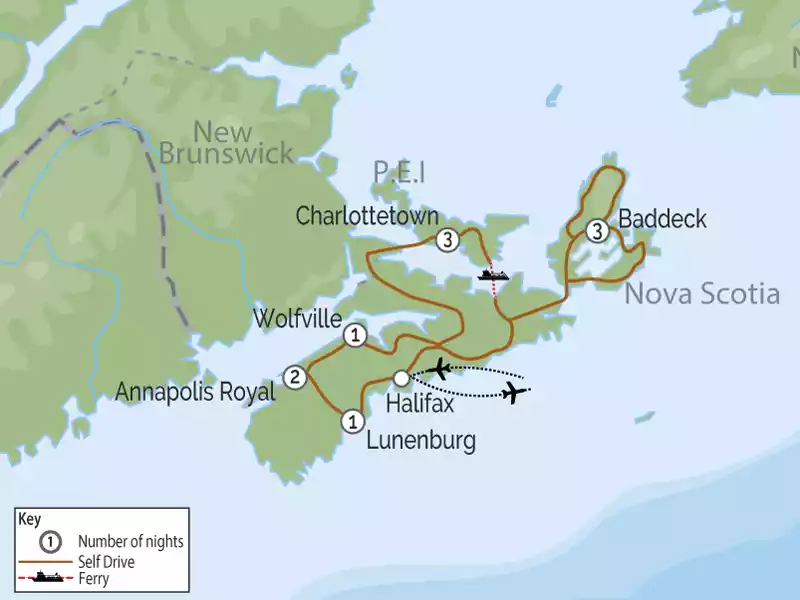
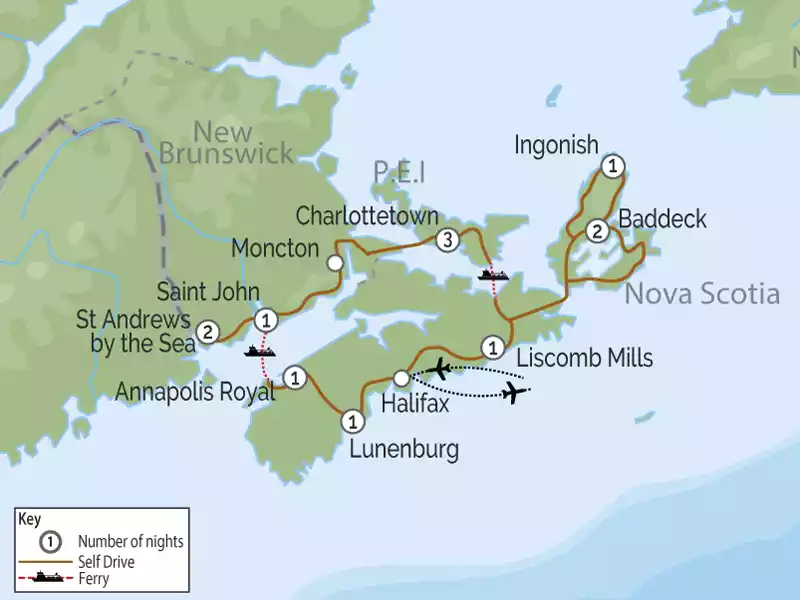
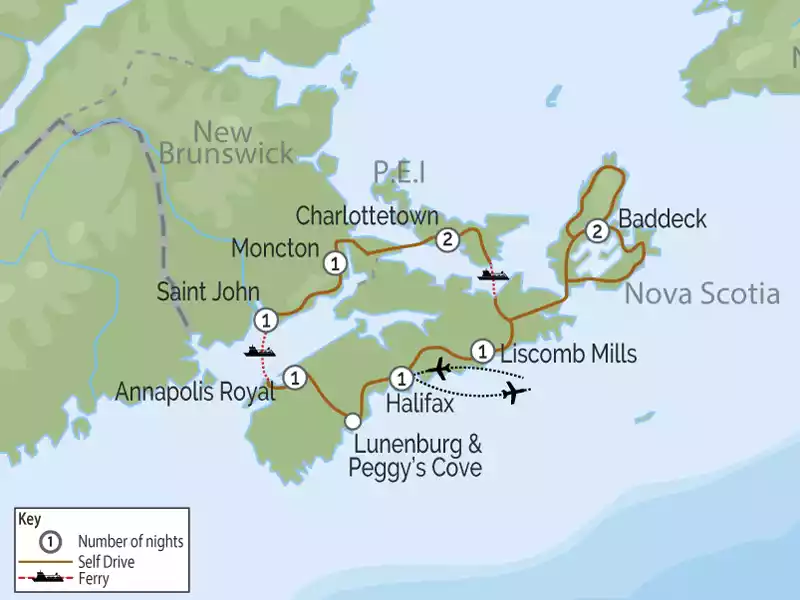
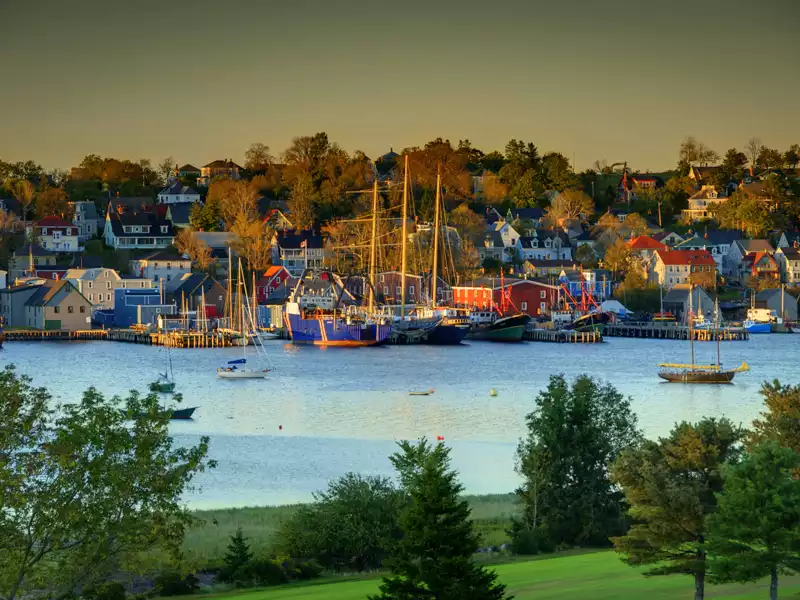
Depart Halifax and travel along Nova Scotia’s scenic South Shore toward Peggy’s Cove, one of the province’s most iconic coastal villages. Here, colourful houses sit against wave-worn granite and the famous lighthouse looks out over the Atlantic Ocean. Continue to Old Town Lunenburg, a UNESCO World Heritage Site known for its beautifully preserved waterfront, colourful architecture and rich seafaring heritage. Time permitting, continue inland to Kejimkujik National Park and National Historic Site, renowned for forest trails, wilderness lakes, canoe routes and deep Mi’kmaw cultural history. Arrive in Annapolis Royal or nearby Smith’s Cove, set close to the Bay of Fundy and surrounded by historic charm, coastal scenery and peaceful maritime landscapes.
Day 2 Whale Watching & Annapolis Royal Exploring | 206 km/128 mi
Travel toward Digby Neck and the Bay of Fundy, where nutrient-rich waters create one of Atlantic Canada’s most rewarding whale watching regions. Depending on your departure point, allow time for the drive and any required ferry connections to reach the whale watching area. Set out in search of humpback, fin, minke and other whale species, with the possibility of seabirds, seals and dramatic Fundy coastal scenery along the way. In the afternoon, return to explore Annapolis Royal and Fort Anne, where centuries of Acadian, Mi’kmaw, French and British history are reflected in the town’s heritage buildings, waterfront setting and historic grounds.
Day 3 Smith’s Cove or Annapolis Royal to Charlottetown | 475 km/295 mi
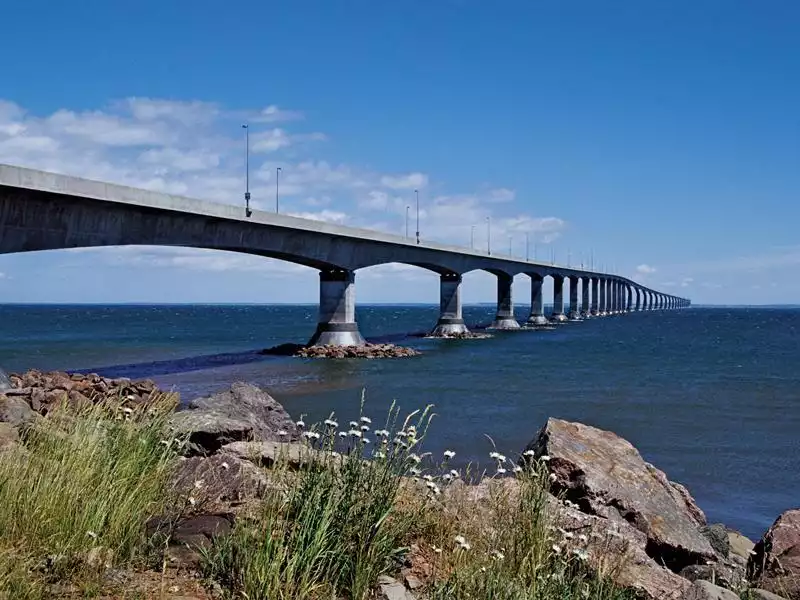
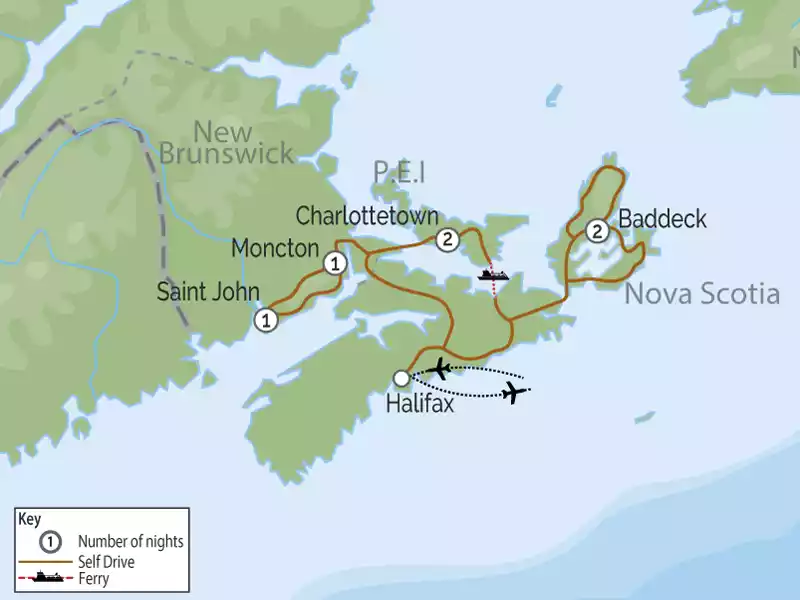
Depart the Annapolis Valley and follow the curve of the Bay of Fundy through one of Nova Scotia’s most scenic and fertile regions. Stop in Wolfville, a lively university town surrounded by vineyards, orchards and tidal landscapes, and enjoy time for lunch in the heart of the town. Continue to Grand-Pré National Historic Site, which commemorates the Grand-Pré area as a centre of Acadian settlement from 1682 to 1755 and the Deportation of the Acadians, which began in 1755. Continue across Nova Scotia and into New Brunswick before crossing the Confederation Bridge to Prince Edward Island. Arrive in Charlottetown, the island’s charming capital, known for its walkable waterfront, heritage streets and relaxed maritime atmosphere.
Day 4 Charlottetown & Prince Edward Island | Exploring
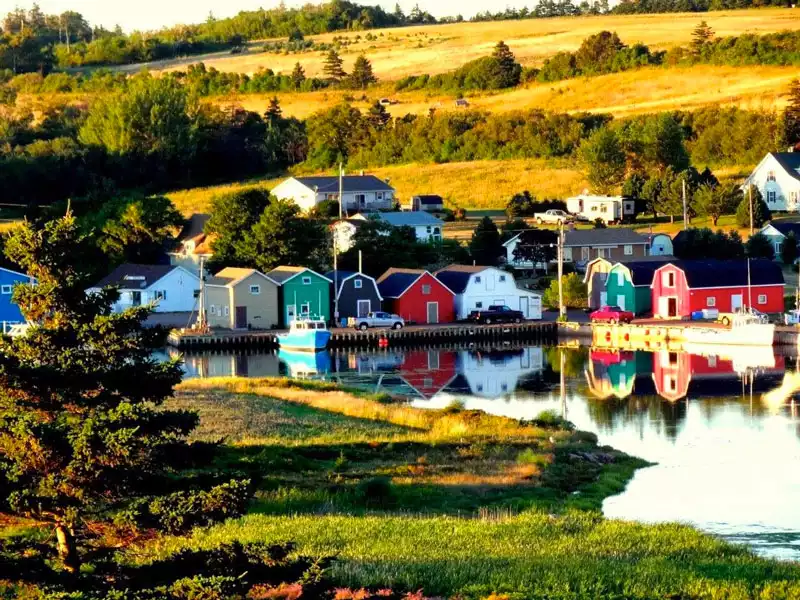
Spend the day exploring Prince Edward Island’s gentle coastal landscapes, where red cliffs, white sand beaches, rolling farmland and green fields create one of Canada’s most distinctive island settings. Travel to Prince Edward Island National Park for views of dunes, shoreline and the Gulf of St. Lawrence, then continue to Green Gables Heritage Place in Cavendish. This beloved literary landmark celebrates L.M. Montgomery and the landscapes that inspired Anne of Green Gables. Return to Charlottetown with time to enjoy its historic streets, waterfront restaurants and welcoming small-city charm.
Day 5 Charlottetown to Cape Breton Island | 274 km/171 mi + Ferry
Depart Charlottetown and travel east toward Orwell Corner Historic Village, a restored 1890s rural community where historic buildings, farm life and heritage demonstrations bring Prince Edward Island’s past to life. Continue to Wood Islands for the 75-minute ferry crossing across the Northumberland Strait to Caribou, Nova Scotia. From here, travel east across mainland Nova Scotia and continue onto Cape Breton Island, a region known for its Gaelic and Celtic heritage, coastal scenery and strong musical traditions. Arrive in Baddeck, set beside the beautiful Bras d’Or Lake.
Day 6 Cabot Trail | 300 km/187 mi
Spend the day exploring the Cabot Trail, one of Canada’s most celebrated scenic drives. The route winds through Cape Breton Highlands National Park, where mountains rise above the Gulf of St. Lawrence and coastal roads reveal sweeping ocean views, forested valleys and dramatic cliffside scenery. Along the way, consider a walk on the Skyline Trail, one of the park’s most famous hikes, with panoramic views over the coastline and highlands. Time permitting, visit the Celtic Music Interpretive Centre, Glenora Distillery, Les Trois Pignons in Chéticamp, or the Gaelic College of Arts & Crafts in St. Ann’s. Return to Baddeck after a day filled with coastal views, highland landscapes and Cape Breton culture.
Day 7 Louisbourg & Baddeck | 220 km/137 mi
Travel southeast toward the Fortress of Louisbourg National Historic Site, one of the most impressive historic sites in Atlantic Canada. This reconstructed 18th-century French fortified town brings colonial life to the present through costumed interpreters, restored buildings and immersive exhibits. Walk the streets of the fortress, learn about daily life in the 1700s and experience the scale of this remarkable coastal stronghold. On your return to Baddeck, visit the Alexander Graham Bell National Historic Site, which celebrates the inventor’s life, work and summers spent on the shores of the Bras d’Or Lake. Time permitting, you may also visit the Highland Village Museum in Iona for insight into Cape Breton’s Gaelic heritage.
Day 8 Baddeck to Halifax | 357 km/222 mi
Depart Baddeck and follow the Bras d’Or Lakes route toward the Canso Causeway, with views of shimmering water, rolling hills and peaceful Cape Breton scenery along the way. Cross back onto mainland Nova Scotia and continue through Antigonish and the rolling landscapes of northern and central Nova Scotia. As the route returns toward Halifax, the scenery shifts from island lakes and highland country to forests, farms and coastal-influenced communities. Arrive in Halifax, where your journey ends after exploring Nova Scotia’s South Shore, the Bay of Fundy, Prince Edward Island and the dramatic landscapes of Cape Breton Island.